


Frequently Asked Question
Our purpose is to act as a Peace Hub for peace-building organizations from around the globe.
We utilize our social media accounts to inform people about peace related activities, live-streams, and initiatives.
Our main social sites are on Twitter (where we can make Peace Trend) – follow us at:
Facebook: follow us here.
Why “X/Twitter”: This is where things “Trend” if you have the most viewers in an account/space at any given time, the most visited account at a given time is shared on and by X/Twitter with every single user on X/Twitter in the world.
When peace activities are shared or re-broadcast through the X/Twitter account, we have the opportunity to make it Trend. Please follow us at https://x.com/livepeace2025
Contact us via e-mail at peacedaytv@gmail.com or through the website.
The U.N. International Day of Peace, also known as World Peace Day, is observed annually on September 21. It was established by the United Nations General Assembly in 1981 and is dedicated to promoting peace among nations and peoples around the world.
Purpose:
The day is intended to:
Strengthen the ideals of peace, both within and among all nations and peoples.
Encourage ceasefires and non-violence on the day.
Promote education, awareness, and actions focused on conflict resolution, human rights, and social justice.
Key Aspects:
In 2001, the General Assembly unanimously adopted a resolution to designate September 21 as a day of non-violence and ceasefire.
Each year, the U.N. announces a theme related to global peace efforts. Past themes have addressed issues such as climate change, youth involvement, and recovering from conflict.
The day is marked by events around the world, including peace walks, educational conferences, art exhibitions, and moments of silence at noon local time.
Symbolic Acts:
The Peace Bell at U.N. Headquarters in New York is rung on this day. It was a gift from Japan, made from coins donated by people from over 60 countries, and it symbolizes global solidarity for peace.
The significance of the International Day of Peace lies in its global message and its role as a symbolic and practical commitment to peace. It serves as a reminder that peace is not just the absence of war, but a proactive effort involving justice, equality, and cooperation.
Here are the key aspects of its significance:
🌍 1. Promotes Global Unity and Solidarity
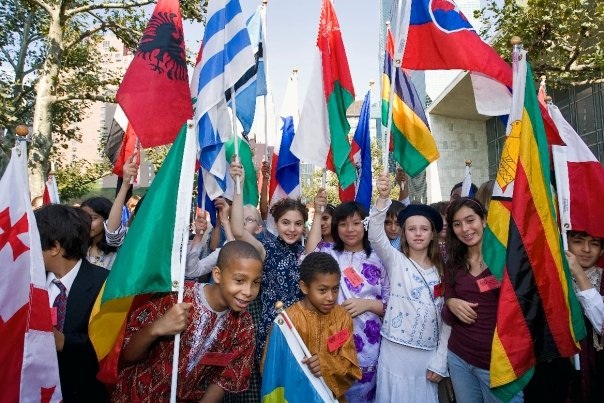
It brings together people from all nations, cultures, and backgrounds to reflect on what peace means and how it can be achieved.
Encourages international cooperation, especially during times of conflict or tension.
✌️ 2. Advocates Non-Violence
The U.N. calls for a 24-hour ceasefire in conflict zones, urging warring parties to stop fighting even briefly.
Highlights the importance of resolving disputes through dialogue rather than violence.
📚 3. Raises Awareness
Focuses attention on current peace-related issues—from armed conflict and disarmament to inequality, racism, climate change, and human rights.
Encourages governments, schools, and communities to educate people about peacebuilding and conflict prevention.
🕊 4. Empowers Individuals and Communities
Serves as a platform for grassroots peace initiatives.
Encourages local actions—such as peace walks, art, music, community discussions, and youth programs—that foster understanding and compassion.
🕰 5. Reminds the World of Peace as an Ongoing Effort
Reinforces that peace is a continuous process, not a one-time achievement.
Encourages reflection on progress made and work still needed in the pursuit of global peace and justice.
In Summary:
The International Day of Peace is significant because it gives the world a moment to:
Pause and reflect.
Promote peaceful values and actions.
Work together to create a culture of peace—not just on September 21, but every day.
Pathways To Peace (PTP) is an international, non‑profit organization established in 1983, dedicated to transforming peace from an abstract ideal into a lived reality. It’s registered as a 501(c)(3) tax‑exempt “social profit” entity based in St. Paul, Minnesota, with key operations also tied to Larkspur, California. It holds UN consultative status as an official Peace Messenger Organization—recognized by both the UN Department of Global Communications and the UN Economic and Social Council (ECOSOC).
Mission & Vision
PTP’s mission is threefold:
Expand the understanding and expression of Peace
Support peacebuilders and peacebuilding activities
Build an integrated movement for a Culture of Peace
PTP emphasizes a holistic, interconnected model—both global and personal, cross‑cultural and intergenerational—in which everyone can be a “Pathway to Peace.”
Key Contributions and Initiatives
1. Founding of the UN International Day of Peace (Peace Day)
PTP played a pivotal role in initiating what became the United Nations’ International Day of Peace through a unanimous General Assembly resolution in 1981. The first observance of Peace Day was celebrated in 1982.
PTP co-founder Avon Mattison, working alongside UN Assistant Secretary-General Robert Muller, was instrumental in bringing this vision to life.
2. Culture of Peace Initiative (CPI)
PTP serves as the International Secretariat for the Culture of Peace Initiative (CPI)—also known as the “We The Peoples” project—a UN‑designated Peace Messenger initiative that connects more than 300 peace-building organizations worldwide.
3. PeaceWave: A Minute of Silence/Moment of Peace
Launched in 1982 on the first observance of Peace Day, the PeaceWave is observed with a global minute of silence at noon in every time zone. It serves as a synchronized act of solidarity across the globe, find our more at Pathways To Peace.
4. The Peace Wheel©
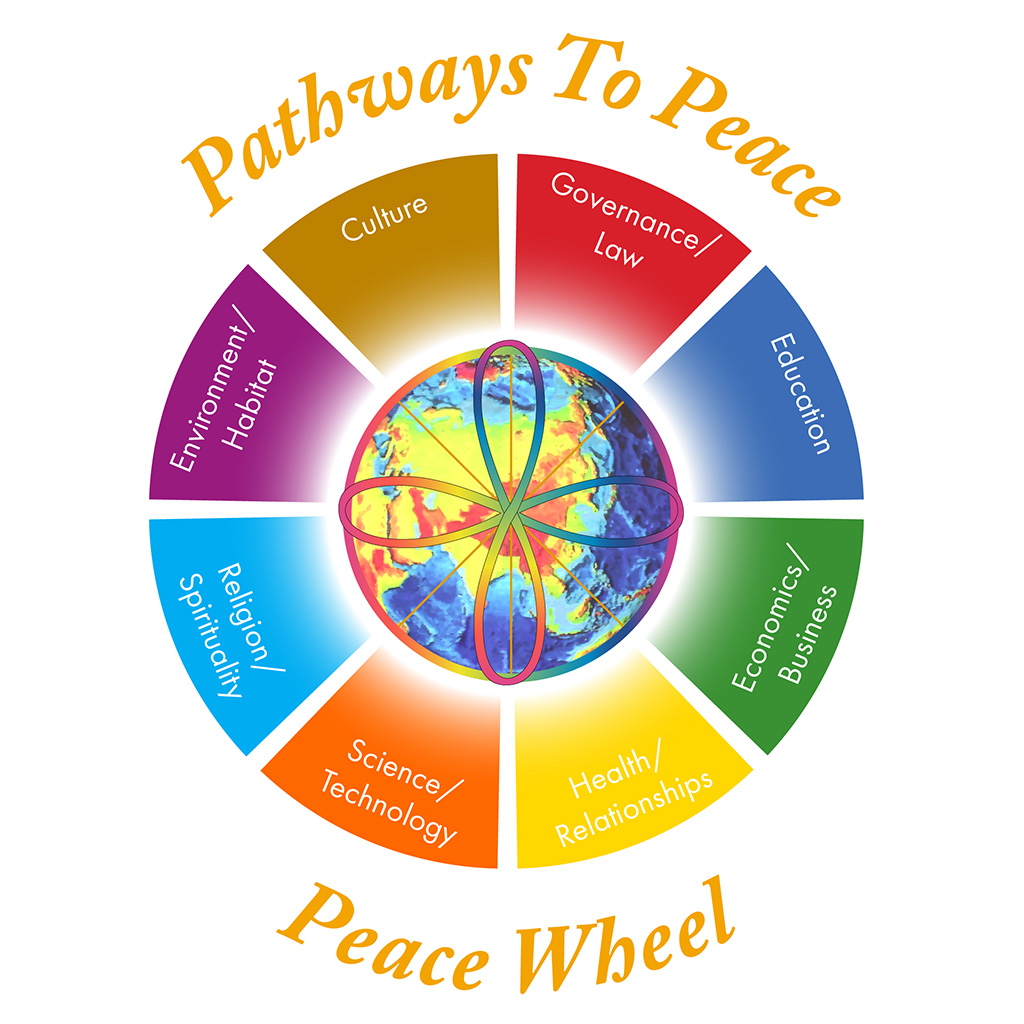
This symbolic model illustrates eight interconnected domains—Governance/Law/Security, Education/Media, Economics/Business, Health/Relationships, Science/Technology, Religion/Spiritual Teachings, Environment/Habitat, and Culture—through which all individuals and sectors can contribute to peace.
5. Local Peacebuilding Efforts
Ashland Culture of Peace Commission (ACPC): Co-founded by PTP leaders like David Wick, this local initiative transformed the city of Ashland, Oregon, into a model for grassroots adoption of a Culture of Peace. It was officially recognized by the city council in 2015.
Additional programs such as Peace Building Through Business, PACEM (Pathways Consulting, Educating, and Mentoring Program), and Operation Big Sister showcase PTP’s diverse outreach across sectors like business, youth, and social justice.
Legacy of Leadership
Avon Mattison, co‑founder and visionary behind PTP, was central to launching Peace Day and the Culture of Peace Initiative. She described peace as more than ending war—it’s about fostering personal and planetary peace through everyday actions.
David Wick, long-time President of PTP, has been a key figure in spreading peacebuilding concepts both within the UN framework and at the community level
Tezekiah Gabriel is the current Executive Director of PTP. She is a devoted peace activist, organizational consultant, and minister whose work centers on fostering genuine peace across cultures, generations, and societies. “Tez” is also ordained and facilitates interfaith and intercultural ceremonies. Her spiritual practice aims to “Empower the Divine Within Each of Us,” encouraging individuals to embrace their own capacity for peace, joy, and unity.
Live Peace is a worldwide initiative that mobilizes music events on September 21, marking the United Nations International Day of Peace. Rather than one concert, it’s a synchronized chorus of hundreds of concerts hosted across cities and communities around the globe. The unifying message? “We want peace.” Live Peace
Global Concert Network
In 2025, more than 20 simultaneous concerts are slated across multiple continents. Notable large-scale events include:Annecy, France, featuring artists like Magic System, Trois Cafés Gourmands, and several DJs
Homburg, Germany at Saalbau Homburg—part of the main Live Peace network Live Peace.
Worldwide City Highlights
Other cities across the globe are joining the movement:Los Angeles (USA)
Santa Susanna (Spain)
Bern (Switzerland)
Dohuk (Iraq)
Alicante (Spain), Prayagraj (India), Belfast (Ireland), Tuba (Philippines), Meki (Ethiopia), Cengles, Basel, Bülach, Leipzig, Cottbus, among others
Inspiration & Support
The concept draws inspiration from iconic concerts like Live Aid. It is backed by several Nobel Peace Prize laureates and global peace organizations.A Global Cultural Activation
The PEAC Institute collaborates with Live Peace to amplify its impact as a 24-hour global concert and cultural movement, leveraging youth-led performances, art, and peaceful action in over 96 countries. This is part of their “Pause for Peace 2025” campaign. Find out more at PEAC Institute.
How It Works
Create or Join an Event
Individuals, organizations, and venues (from bars to event spaces) can participate by hosting concerts or art performances. Participants can register their events through the Live Peace platform to receive support and visibility.Streaming & Outreach
Events range from intimate local meetups to large public concerts. Some venues also livestream content, allowing global audiences to share in the message collectively.Youth & Community Focus
Live Peace emphasizes youth expression, creative freedom, and community resilience—positioning peace not just as a concept, but a collective experience and promise.
Why It Matters
Unity Through Art
Music dissolves boundaries—Live Peace uses this universal medium to foster empathy, solidarity, and shared intent across all continents.Collective Visibility
By aligning concerts worldwide in perfect sync, the movement amplifies the visibility and urgency of peace as a global mission.Empowering Local Voices
Whether in major cities or small towns, anyone can raise their voice—highlighting that peace isn’t reserved for leaders but created by all of us.